
Explore
Neuroscience Researchers
Browse 53 researchers focused on neuroscience in consciousness research.
53 results found
Adrian Owen
Professor of Cognitive Neuroscience · Western University
Neuroscientist who pioneered the use of fMRI to detect consciousness in patients diagnosed as being in a vegetative state, demonstrating that some can respond to commands through brain activity alone.
Alysson Muotri
Professor of Pediatrics and Cellular & Molecular Medicine · UC San Diego
Neuroscientist who created brain organoids ("mini-brains") that spontaneously generate electrical activity resembling preterm infant EEG patterns, raising questions about consciousness in lab-grown neural tissue.
Anil Seth
Professor of Cognitive & Computational Neuroscience · University of Sussex
Neuroscientist and author of "Being You." Co-Director of Sussex Centre for Consciousness Science, known for predictive processing approach to consciousness.
Antonio Damasio
University Professor and David Dornsife Professor of Neuroscience · University of Southern California
Neuroscientist who developed the somatic marker hypothesis, showing how emotions and feelings are central to decision-making and consciousness. His work bridges neuroscience with the philosophy of self and feeling.
Antti Revonsuo
Professor of Cognitive Neuroscience · University of Turku / University of Skövde
Cognitive neuroscientist who developed the virtual reality metaphor of consciousness and the threat simulation theory of dreaming. His work bridges philosophy of mind with experimental dream and consciousness research.
Axel Cleeremans
Professor of Cognitive Science · Université libre de Bruxelles
Cognitive scientist who developed the radical plasticity thesis, proposing that consciousness is something the brain learns to do through self-modeling. His research uses computational and empirical methods to study implicit learning and awareness.
Bernard Baars
Affiliated Fellow · The Neurosciences Institute (formerly)
Neuroscientist who originated Global Workspace Theory, proposing that consciousness arises from a "global workspace" that broadcasts information to widespread brain areas.
Biyu He
Associate Professor of Neurology, Neuroscience, and Radiology · New York University
Neuroscientist studying the neural mechanisms of conscious perception, particularly how the brain makes decisions at perceptual thresholds and the role of spontaneous neural activity in shaping awareness.
Catherine Kerr
Assistant Professor (Posthumous) · Brown University
Neuroscientist who studied how mindfulness meditation modulates cortical alpha rhythms that regulate sensory information flow. Her work revealed how attention to body sensations during meditation trains brain gating mechanisms. Deceased 2016.
Catherine Tallon-Baudry
Research Director · École Normale Supérieure, Paris
Neuroscientist who investigates how visceral signals from internal organs (especially the gut and heart) contribute to conscious experience and the sense of self. Her research pioneers the role of the body in shaping subjectivity.
Christof Koch
Neuroscientist · Allen Institute
Neuroscientist and former president of the Allen Institute for Brain Science, studying the neural basis of consciousness.
David Eagleman
Adjunct Professor of Psychiatry and Behavioral Sciences · Stanford University
Neuroscientist studying time perception, sensory substitution, and consciousness. Creator of the Neosensory vest for sensory augmentation. Known for making neuroscience accessible to general audiences.
David Nutt
Professor · Imperial College London
Neuropsychopharmacologist and co-founder of Imperial Centre for Psychedelic Research. Former UK drug policy advisor known for evidence-based approach.
Gavin Rees
Professor of Cognitive Neurology · University College London
Cognitive neuroscientist studying the neural basis of visual awareness, attention, and how brain structure relates to individual differences in conscious experience.
Giulio Tononi
Professor of Psychiatry · University of Wisconsin-Madison
Neuroscientist and psychiatrist who developed Integrated Information Theory (IIT), one of the leading scientific theories of consciousness.
Hakwan Lau
Team Leader, Consciousness and Cognition · RIKEN Center for Brain Science
Neuroscientist working on higher-order theories of consciousness and perceptual reality monitoring. His research uses neuroimaging and computational modeling to understand how the brain generates subjective experience.
Heleen Slagter
Professor of Cognitive Science · Monash University
Cognitive neuroscientist studying how meditation training affects attention, consciousness, and brain plasticity. Her work showed that intensive meditation can reduce the attentional blink.
Iain McGilchrist
Psychiatrist and Writer · Independent
Psychiatrist and literary scholar whose research on brain hemispheric differences argues that the left and right hemispheres attend to the world in fundamentally different ways, with profound implications for consciousness, culture, and civilization.
Jonathan Cohen
Robert Bendheim and Lynn Bendheim Thoman Professor in Neuroscience · Princeton University
Computational neuroscientist studying cognitive control, attention, and consciousness through computational modeling. Developed influential models of prefrontal cortex function.
Jonathan Schooler
Professor of Psychological and Brain Sciences · UC Santa Barbara
Psychologist studying meta-consciousness, mind wandering, and the relationship between consciousness and creativity. Known for research on the "replication crisis" and verbal overshadowing.
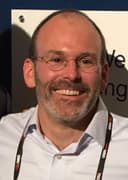
Judson Brewer
Director of Research and Innovation · Brown University Mindfulness Center
Neuroscientist and mindfulness expert researching the neuroscience of habit change and addiction. Developed app-based mindfulness treatments.
Julia Mossbridge
Director · IONS Innovation Lab / University of San Diego
Cognitive neuroscientist studying presentiment (physiological anticipation of unpredictable events) and positive precognition. Combines contemplative science with empirical research.
Karl Friston
Professor of Neuroscience · University College London
Neuroscientist who developed the free energy principle and active inference framework, providing a unified theory of brain function.
Liad Mudrik
Professor of Neuroscience · Tel Aviv University
Cognitive neuroscientist studying the neural mechanisms of consciousness, integration, and volition. Co-leads adversarial collaboration COGITATE project testing consciousness theories.
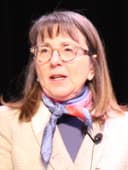
Lisa Feldman Barrett
Professor of Psychology · Northeastern University / Harvard Medical School / MIT
Psychologist who pioneered the theory of constructed emotion, demonstrating that emotions are not hardwired but constructed by the brain.
Lucia Melloni
Research Group Leader · Max Planck Institute for Empirical Aesthetics
Neuroscientist leading adversarial collaboration COGITATE project testing IIT vs. GWT. Studies neural underpinnings of perception and consciousness.
Marcello Massimini
Professor of Neurophysiology · University of Milan
Neuroscientist who developed the perturbational complexity index (PCI), a TMS-EEG based measure that reliably distinguishes conscious from unconscious brain states in clinical settings including vegetative state patients.
Mark Solms
Professor of Neuropsychology · University of Cape Town
Neuropsychologist who founded the field of neuropsychoanalysis and argues that consciousness originates in the brainstem rather than the cortex. His work integrates Freudian psychoanalytic theory with modern affective neuroscience.
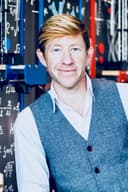
Matthew Walker
Professor of Neuroscience and Psychology · UC Berkeley
Neuroscientist studying sleep and its impact on consciousness, memory, and brain function. Author of bestselling "Why We Sleep."
Melanie Boly
Associate Professor of Neurology and Psychiatry · University of Wisconsin-Madison
Neurologist and neuroscientist specializing in disorders of consciousness, studying how brain activity differs in coma, vegetative states, and minimally conscious states. Her work uses neuroimaging to detect covert awareness.
Melanie Wilke
Professor of Cognitive Neurology · University Medical Center Goettingen
Neuroscientist studying the neural correlates of visual awareness using neuroimaging and lesion studies, focusing on how subcortical structures contribute to conscious perception.
Michael Graziano
Professor of Psychology and Neuroscience · Princeton University
Neuroscientist who developed the Attention Schema Theory, proposing that consciousness is the brain's simplified model of its own attention processes. His theory offers a mechanistic explanation for subjective awareness.
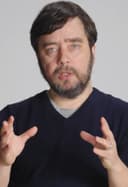
Michael Levin
Professor of Biology · Tufts University
Professor of Biology at Tufts University studying how cellular collectives process information and make decisions about anatomical outcomes using bioelectricity.
Moran Cerf
Professor of Neuroscience and Business · Northwestern University
Neuroscientist who uses neural decoding techniques to study the neural basis of conscious thought, decision-making, and dreams. His work with implanted electrodes provides unique single-neuron data on conscious content.
Morten Overgaard
Professor of Cognitive Neuroscience · Aarhus University
Cognitive neuroscientist who developed the Perceptual Awareness Scale (PAS) for measuring graded levels of conscious experience. Studies the relationship between attention and consciousness.
Moshe Bar
Professor of Neuroscience · Bar-Ilan University
Neuroscientist studying how the brain generates predictions and the relationship between prediction, mood, and consciousness. Known for his work on proactive brain function.
Nao Tsuchiya
Professor · Monash University
Neuroscientist who conducts experimental tests of Integrated Information Theory and studies the neural correlates of consciousness using EEG, fMRI, and psychophysics at the intersection of theory and experiment.
Ned Block
Silver Professor of Philosophy, Psychology, and Neural Science · New York University
Philosopher who introduced the influential distinction between access consciousness and phenomenal consciousness. Co-director of the NYU Center for Mind, Brain, and Consciousness, his work shapes debates on the nature and measurement of conscious experience.
Olaf Blanke
Professor of Neuroscience · École Polytechnique Fédérale de Lausanne (EPFL)
Neuroscientist who studies the neural basis of bodily self-consciousness, including out-of-body experiences, which he can experimentally induce using virtual reality and brain stimulation. His work bridges neurology with consciousness research.
Patricia Churchland
Professor Emerita of Philosophy · University of California, San Diego
Neurophilosopher who pioneered the intersection of philosophy and neuroscience, arguing that traditional folk-psychological concepts of mind may be replaced by neuroscientific understanding. A leading figure in eliminative materialism.
Peter Tse
Professor of Psychological and Brain Sciences · Dartmouth College
Cognitive neuroscientist studying visual consciousness, attention, and the neural code for conscious experience. Proposes that synaptic change underlies free will.
Rafael Yuste
Professor of Biological Sciences and Neuroscience · Columbia University
Neuroscientist who co-launched the BRAIN Initiative and develops technologies to map and manipulate neural circuits. His work on neural ensembles is foundational for understanding the brain-basis of consciousness at the circuit level.
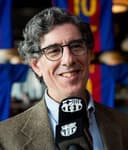
Richard Davidson
Professor of Psychology and Psychiatry · University of Wisconsin-Madison
Pioneer in contemplative neuroscience, studying meditation and well-being. Founded Center for Healthy Minds, collaborates with the Dalai Lama.
Robin Carhart-Harris
Professor of Neurology & Psychiatry · UCSF (formerly Imperial College London)
Neuroscientist leading research on psychedelics and their effects on consciousness. Developed the entropic brain hypothesis.
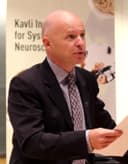
Stanislas Dehaene
Professor of Experimental Cognitive Psychology · Collège de France
Cognitive neuroscientist and advocate for Global Neuronal Workspace Theory of consciousness. Studies consciousness, reading, and mathematical cognition.
Stefano Mancuso
Professor of Plant Neurobiology · University of Florence
Plant neurobiologist who studies intelligence and signaling in plants, challenging anthropocentric definitions of consciousness. His research demonstrates that plants exhibit sophisticated problem-solving, memory, and communication.
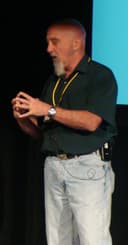
Stuart Hameroff
Professor of Anesthesiology · University of Arizona
Anesthesiologist proposing quantum processes in microtubules as the basis for consciousness (Orchestrated Objective Reduction theory with Roger Penrose).
Susana Martinez-Conde
Professor of Ophthalmology · SUNY Downstate Health Sciences University
Neuroscientist studying visual perception, awareness, and the neuroscience of illusion. Known for research on microsaccades and perceptual illusions.
Tania Singer
Scientific Director · Max Planck Society / Social Neuroscience Lab
Neuroscientist who pioneered research on empathy, compassion, and social emotions. Led the ReSource Project, the largest longitudinal study on meditation-based mental training.
Tristan Bekinschtein
University Lecturer in Psychology · University of Cambridge
Neuroscientist studying consciousness in brain-injured patients and during sleep, using auditory paradigms to detect covert cognition in vegetative and minimally conscious patients.
Victor Lamme
Professor of Cognitive Neuroscience · University of Amsterdam
Neuroscientist who developed the recurrent processing theory of visual consciousness, arguing that recurrent (feedback) neural activity is both necessary and sufficient for conscious experience, independent of attention or report.
Wolf Singer
Emeritus Director · Max Planck Institute for Brain Research
Neurophysiologist known for his work on neural synchrony and the binding problem — how the brain integrates distributed neural activity into unified conscious perception through gamma oscillations.
Zoran Josipovic
Research Associate & Adjunct Professor · New York University
Neuroscientist studying nondual awareness — a form of consciousness characterized by the collapse of the subject-object duality. Uses fMRI to study meditators experiencing nondual states.